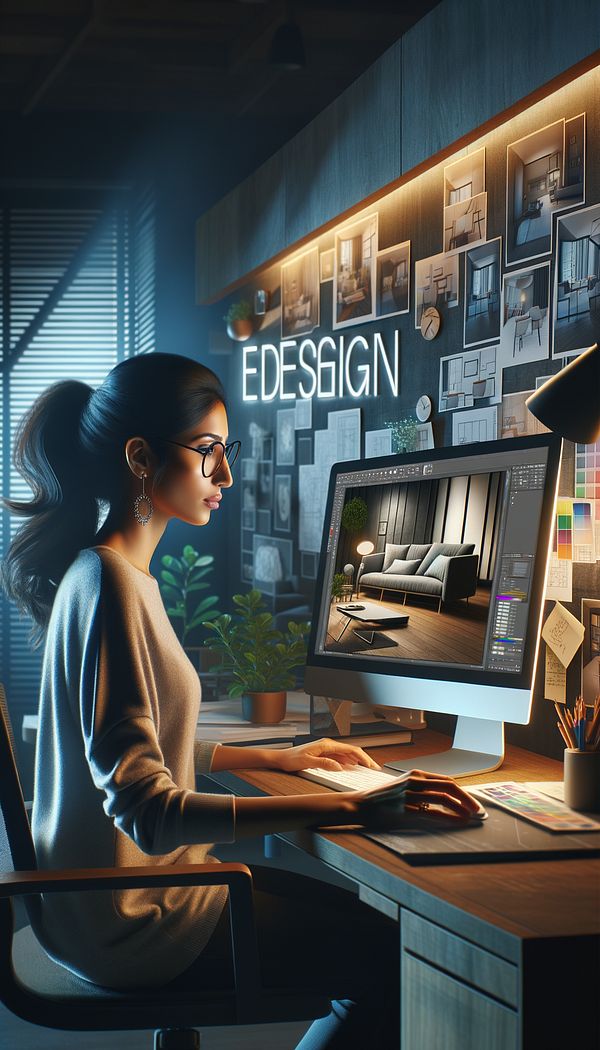
What is eDesign?
eDesign is a remote Interior Design service facilitated through digital communication.
Description
eDesign, also known as virtual interior design, transforms the traditional interior design process into a digital experience. By leveraging technology, eDesign allows designers and clients to collaborate and communicate from anywhere in the world. This service typically involves the exchange of ideas, photos, measurements, and other essential information through online platforms.
One of the key benefits of eDesign is its accessibility and convenience. Without the need for in-person meetings, clients can work with designers regardless of geographical barriers, making high-quality interior design services more accessible to a broader audience. Additionally, this model often proves to be more cost-effective than traditional interior design services, as it reduces the overhead costs associated with physical showrooms or a Site Visit.
The process usually begins with a client consultation conducted online, where the designer gathers information about the client’s space, preferences, and budget, often using a Design Questionnaire. Following this, the designer creates a digital mood board, Space Plan, digital Rendering, and shopping list tailored to the client's needs. Clients then have the flexibility to purchase items at their own pace or use the designer’s Sourcing recommendations to explore alternatives.
Through eDesign, clients are actively involved in the design process, providing feedback and making decisions with the guidance of their designer. This collaborative approach ensures that the final space reflects the client’s personal style and functional requirements, all while making the journey enjoyable and interactive.
Usage
eDesign is utilized by individuals looking to redesign or decorate their homes, businesses seeking professional interior design for their spaces, and interior design professionals offering remote services. It's especially beneficial for clients living in remote areas or those who prefer the convenience of collaborating digitally.
FAQs
-
Is eDesign less expensive than traditional interior design services?
Yes, eDesign can be more cost-effective than traditional interior design services due to reduced overhead costs like travel and physical meetings.
-
Can eDesign be personalized to my specific needs and style?
Absolutely. eDesign is highly personalized, as designers work closely with clients through digital communication to ensure the space reflects their personal style and needs.
-
How do I communicate with my designer in an eDesign project?
Communication in eDesign typically occurs through email, video calls, and specialized interior design platforms, allowing for a seamless exchange of ideas and feedback.
-
What is included in an eDesign package?
An eDesign package often includes an online consultation, digital mood board, space plan, style direction, and a shopping list tailored to the room.
-
How is online interior design different from in-person interior design?
Online interior design relies on photos, measurements, video calls, and digital plans, while in-person design may include site visits and hands-on styling.
Practical Application
If you're considering eDesign for your space, start by researching and selecting a designer who aligns with your style and needs. Prepare to share details about your space, including measurements, photos, and a Floor Plan if available, and be open to virtual communication and collaboration. Remember, the success of an eDesign project relies heavily on clear communication and mutual trust between the client and designer.
Try this in Room AI
Turn what you've learned into a real room design.
-
Accent ColorAn accent color is a color used sparingly to add vibrancy and interest to a room.
-
AccessoriesAccessories in interior design refer to items used to enhance the aesthetic appeal and functionality of a space.
-
AestheticAn aesthetic refers to the overall look or style that is pleasing to the senses.
-
Ambient LightingAmbient lighting is the base layer of light in a space that provides overall illumination.
-
BalanceBalance in interior design refers to the distribution of visual weight in a space.