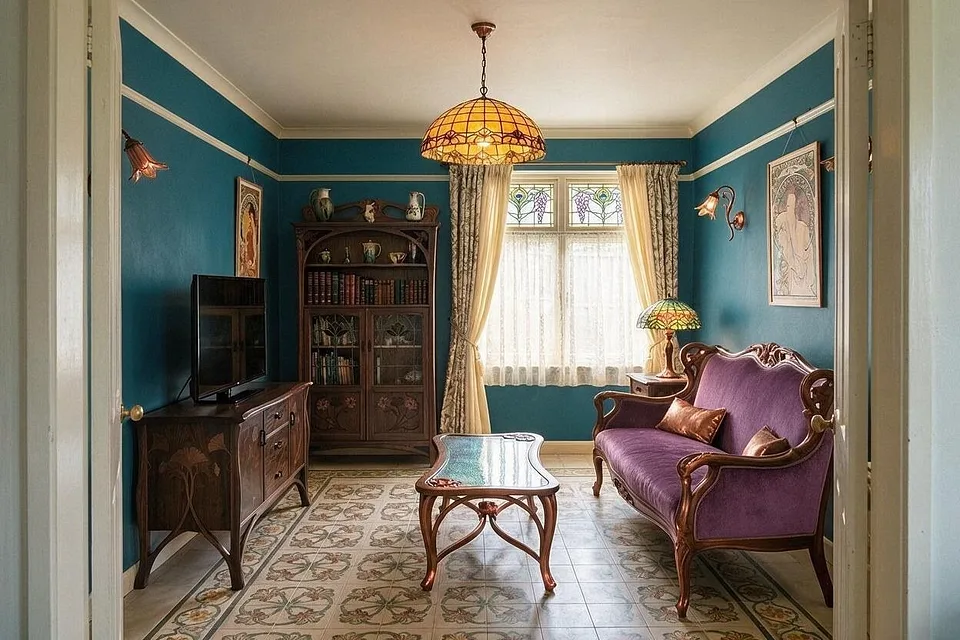
3 palettes, one room
Art Nouveau color palettes
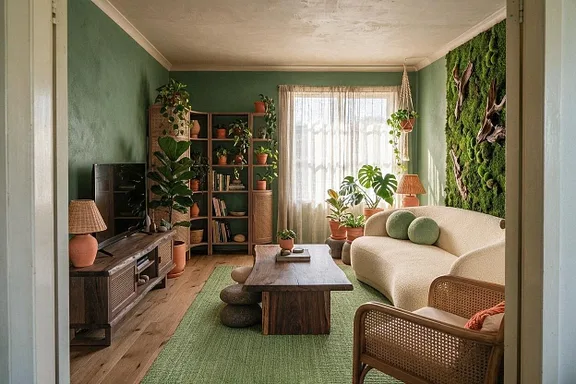
Art Nouveau color comes from the garden: mossy greens, mustard, lilac and peacock blue, softened by cream and warm wood. The colors follow curves and flowers, so they look best in pattern and stained glass as well as on the walls.
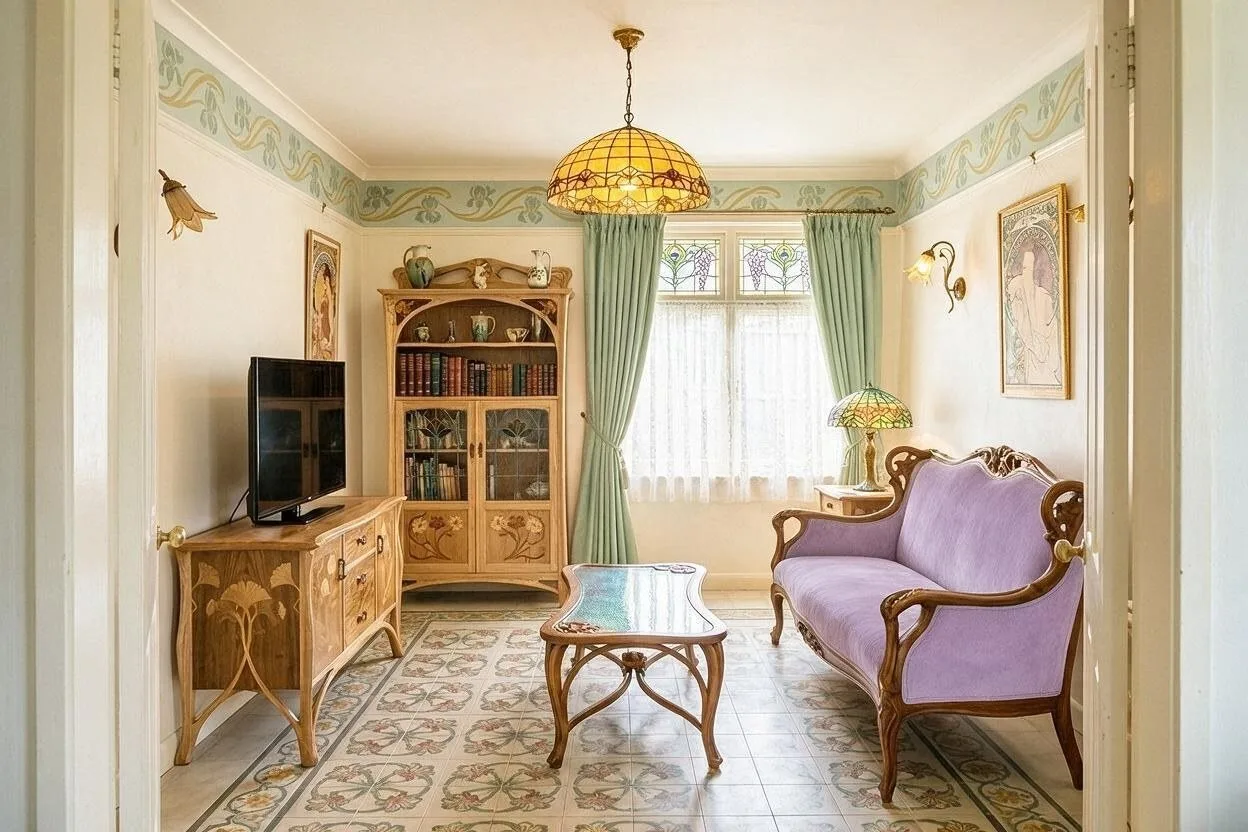
Every color, and where it goes
Hex codes to match against paint and fabric samples. Colors on screens and in daylight never quite agree, so hold a sample up in the room before you commit.
Moss and Mustard
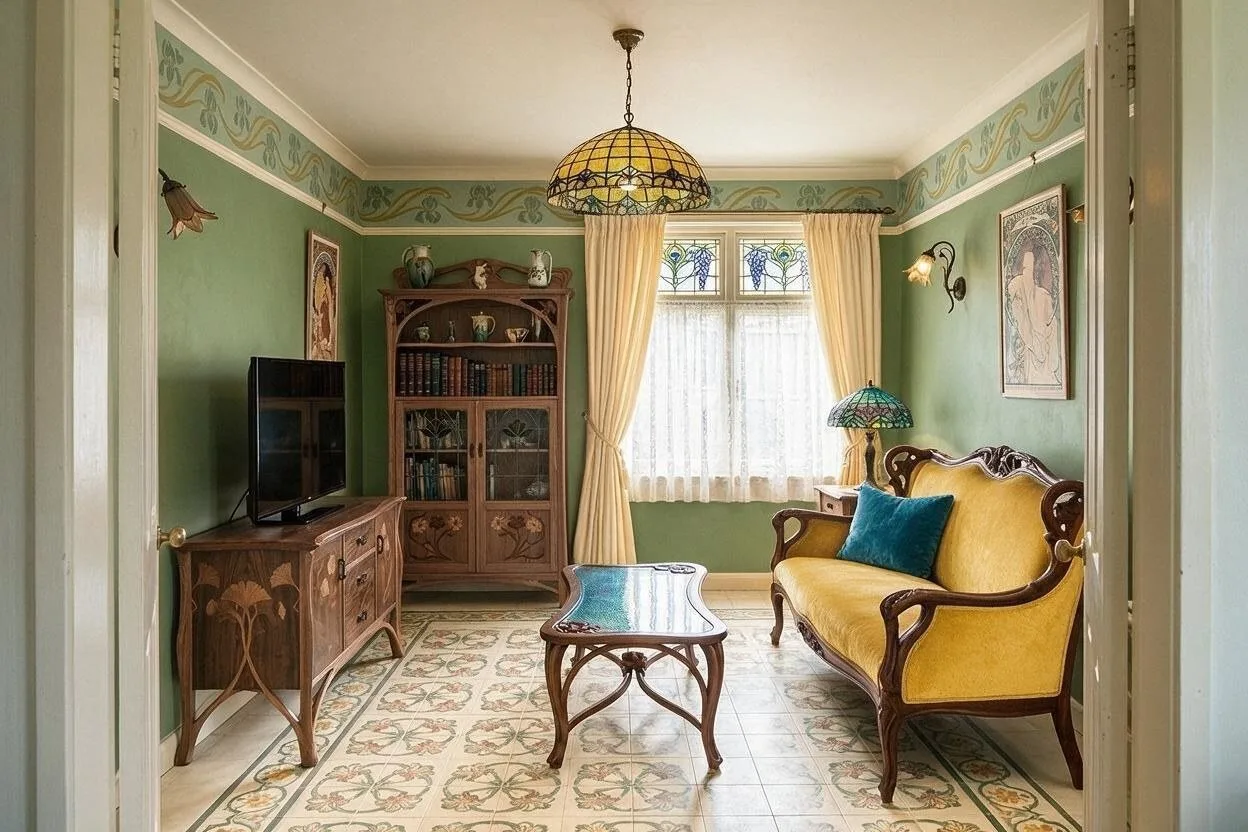
The classic: mossy green walls and a mustard sofa, warm and a little mysterious.
-
Moss green
Walls
#6E7A4E -
Mustard
Sofa
#C99A3B -
Warm walnut
Wood furniture
#6A4A32 -
Cream
Rug and curtains
#EFE5CF -
Peacock blue
Cushions and glass
#2A5C6B
Lilac Glass
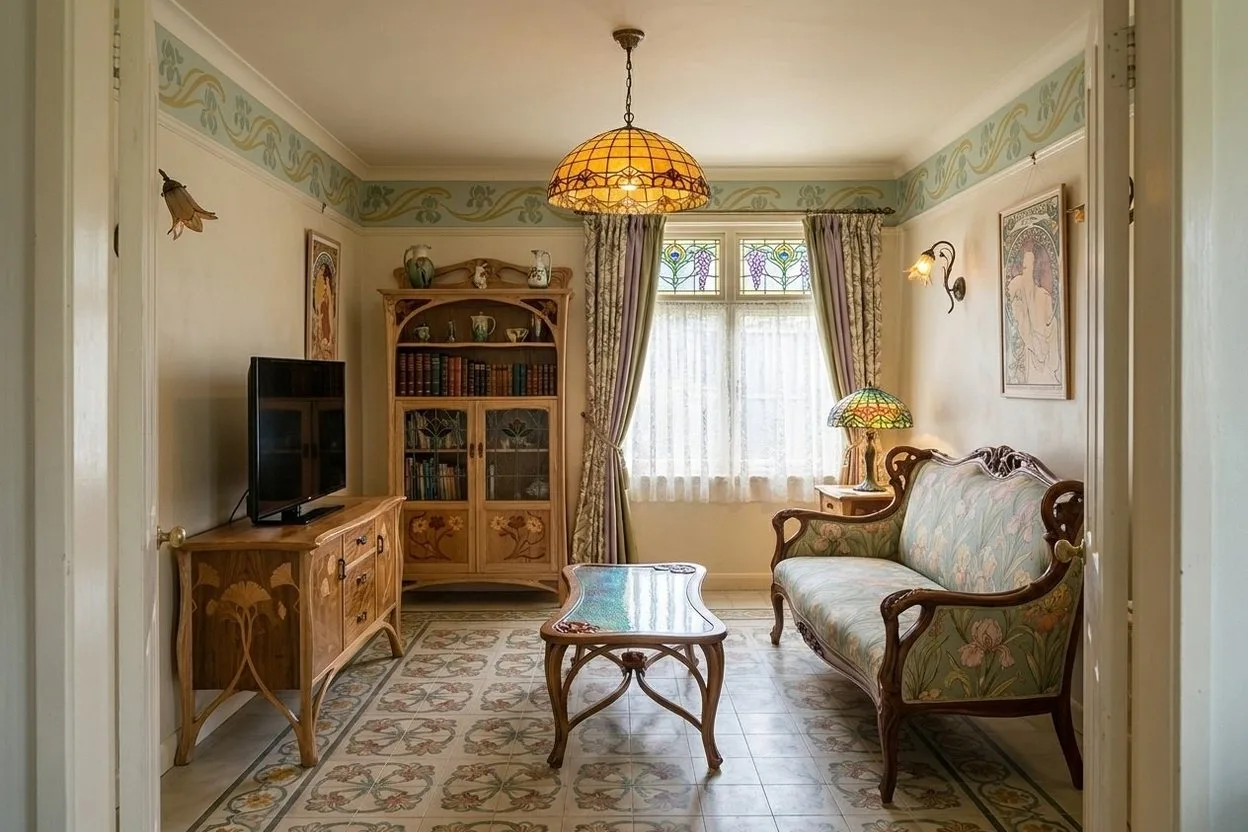
The soft one: lilac and sage on cream, like a stained-glass window in the afternoon.
-
Cream
Walls
#F1E8D6 -
Lilac
Sofa
#A893B5 -
Honey oak
Wood furniture
#B08550 -
Sage
Curtains and rug
#9AA585 -
Old gold
Lamps and frames
#B39150
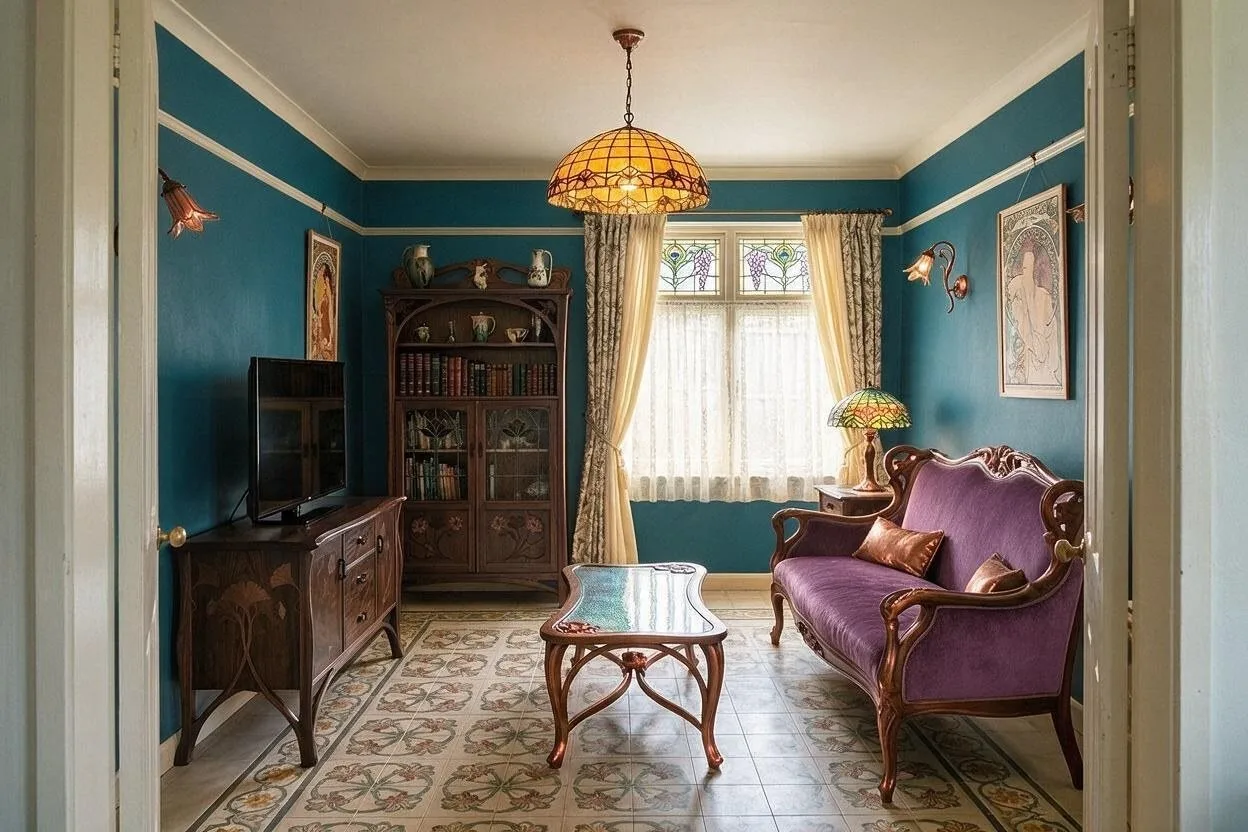
Peacock
The rich one: peacock blue walls with copper and plum, for an evening room.
-
Peacock blue
Walls
#245563 -
Plum
Sofa
#5E3A55 -
Dark walnut
Wood furniture
#4F3526 -
Copper
Lamps and cushions
#B06D45 -
Cream
Rug and curtains
#EDE3CC
How to use a palette
Every palette here is listed from the most of the room to the least. Keep roughly to that order and the colors hold together.
-
1
Most of the room: the first color
The walls, and often the ceiling. A light, quiet color that everything else sits against.
-
2
A third: the next two
The big pieces: the sofa, the rug, the wood. They set the mood of the room.
-
3
A tenth: the last two
Cushions, a lamp, frames, a vase. Small, so a bold accent stays an accent.
More on Art Nouveau
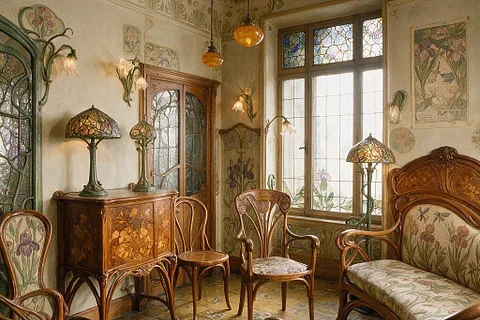
Flowing lines borrowed from plants, around 1900. What makes the style, what to try first, what spoils it, and ordinary rooms before and after.
More palettes
See these colors on your own room.
Upload a photo, pick a palette, and change any color you're not sure about. Free to try, no card needed.