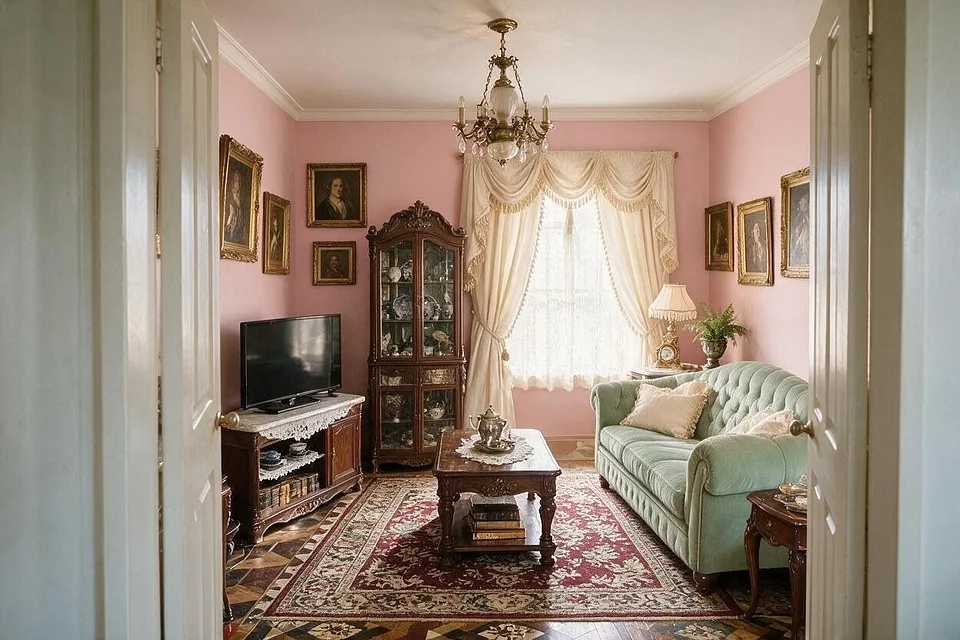
3 palettes, one room
Victorian color palettes
Victorian color is rich and deep: oxblood, bottle green, plum and peacock, with dark mahogany and gold. Rooms were meant to feel enclosed and warm, so the walls carry color too.
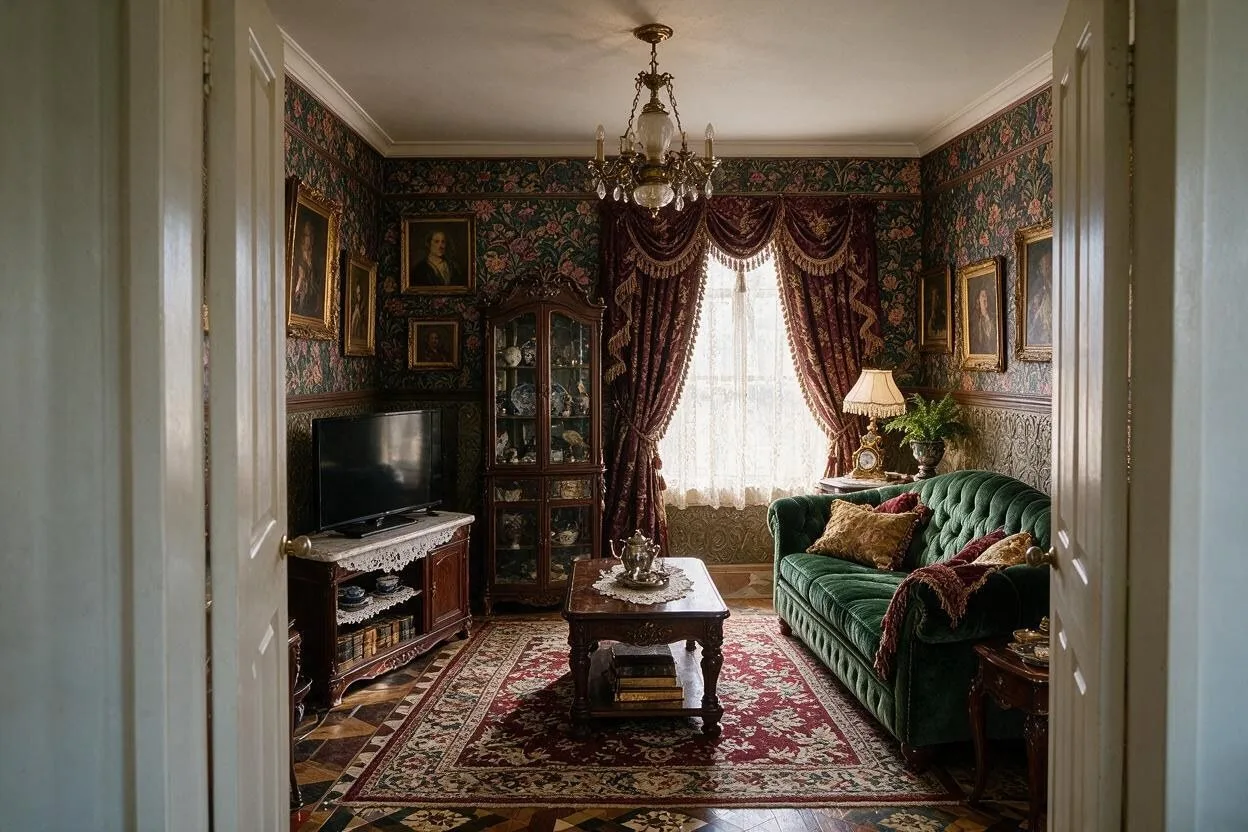
Every color, and where it goes
Hex codes to match against paint and fabric samples. Colors on screens and in daylight never quite agree, so hold a sample up in the room before you commit.
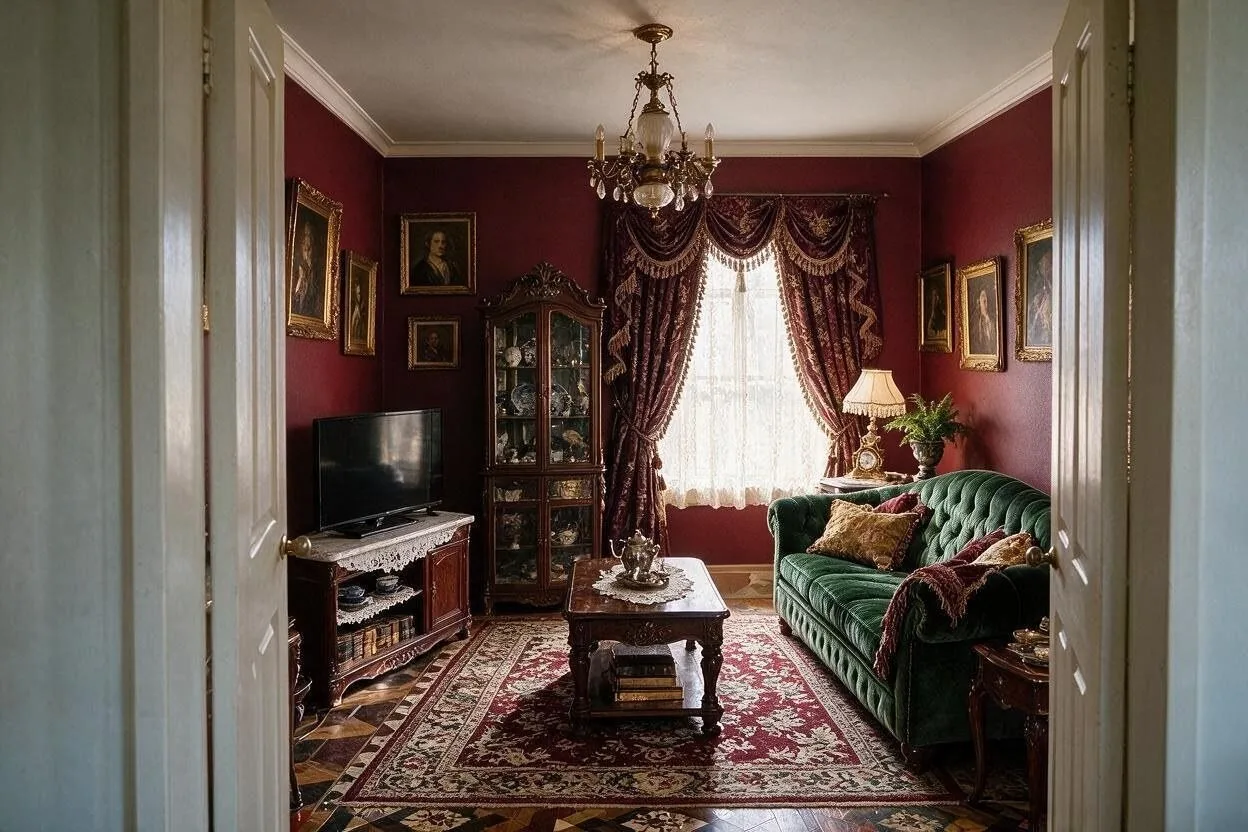
Oxblood Parlor
The classic parlor: deep red walls, mahogany and gold, warm and enclosing.
-
Oxblood
Walls
#5E1F23 -
Bottle green
Sofa
#2F4234 -
Mahogany
Wood furniture
#4F2A1E -
Antique gold
Frames, lamps and trim
#B08D4E -
Ivory
Lace and lampshades
#EFE6D3
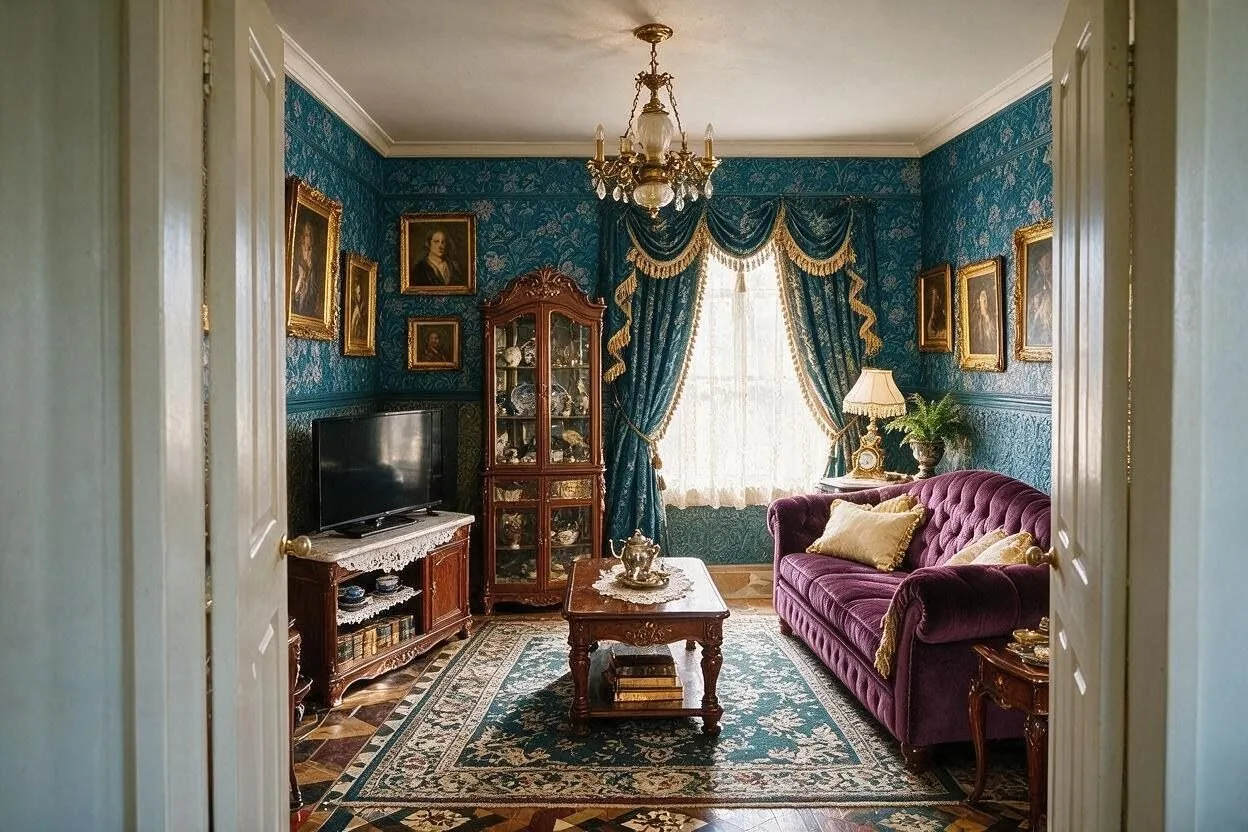
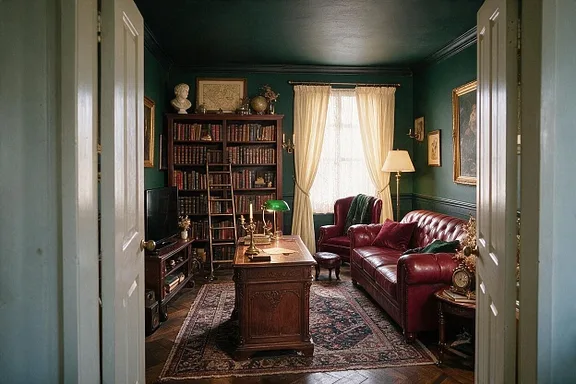
Peacock
The jewel box: peacock teal and plum, for a room that wants to be remembered.
-
Peacock teal
Walls
#1F5160 -
Plum
Sofa
#5B3550 -
Mahogany
Wood furniture
#4F2A1E -
Gold
Frames and lamps
#B8934A -
Cream
Cushions and lampshades
#EFE6D2
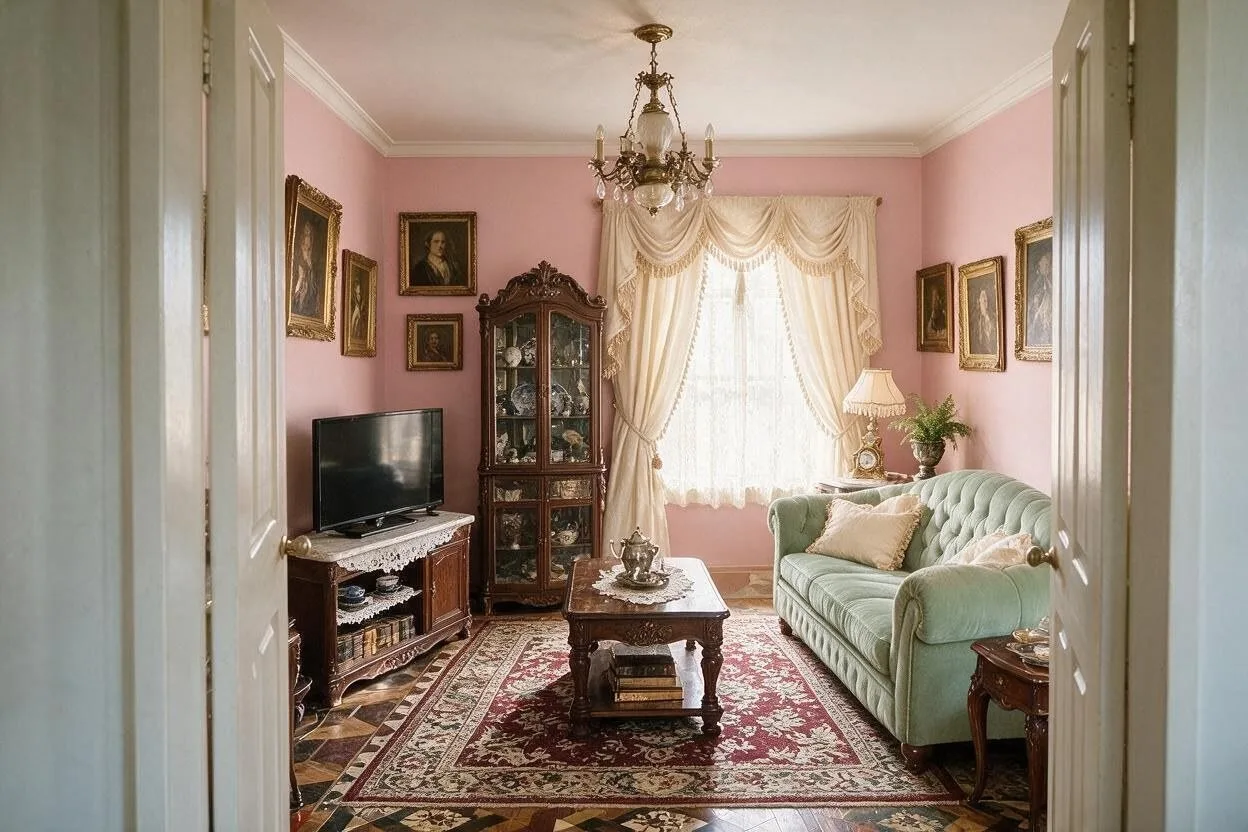
Faded Rose
The softer Victorian: dusty rose and sage, like an old house with the sun on it.
-
Dusty rose
Walls
#D2A9A1 -
Sage
Sofa
#9CA58E -
Walnut
Wood furniture
#5C3F2E -
Cream
Cushions and curtains
#F1E8DA -
Old brass
Lamps and frames
#A68A57
How to use a palette
Every palette here is listed from the most of the room to the least. Keep roughly to that order and the colors hold together.
-
1
Most of the room: the first color
The walls, and often the ceiling. A light, quiet color that everything else sits against.
-
2
A third: the next two
The big pieces: the sofa, the rug, the wood. They set the mood of the room.
-
3
A tenth: the last two
Cushions, a lamp, frames, a vase. Small, so a bold accent stays an accent.
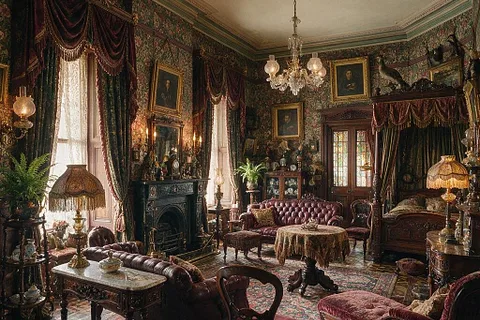
More on Victorian
Rich, ornate and layered, from the 19th century. What makes the style, what to try first, what spoils it, and ordinary rooms before and after.
More palettes
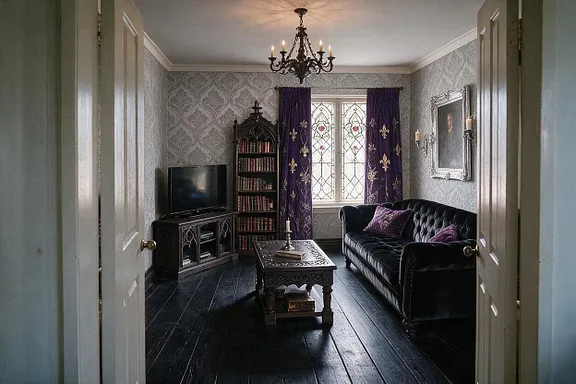
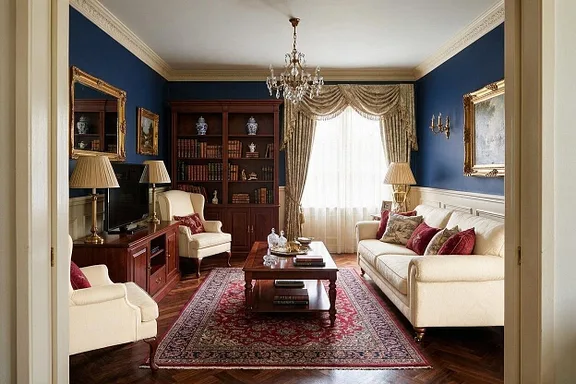
See these colors on your own room.
Upload a photo, pick a palette, and change any color you're not sure about. Free to try, no card needed.