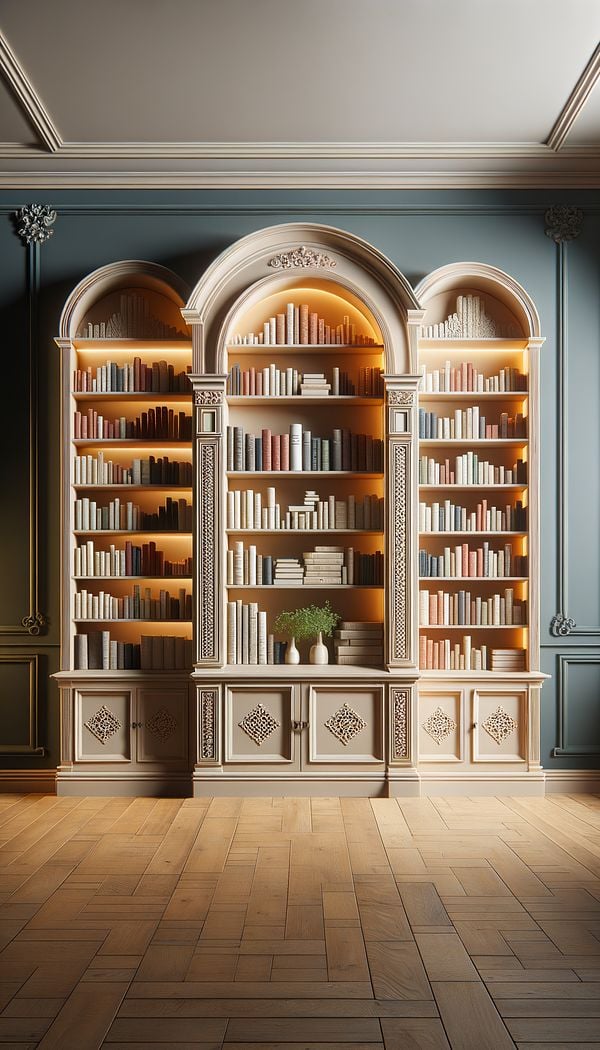
What is an Alcove?
An alcove is a recessed area in a room, often used for additional space or styling.
Description
An alcove is a charming architectural feature that adds both form and function to a space. Typically found in the form of a recess or small niche within the walls of a room, alcoves can be naturally occurring in older homes or intentionally designed as Built in features in new constructions. Their intriguing shape and purpose add a layer of complexity and interest to interior design.
Alcoves are incredibly versatile and can serve various purposes depending on their size, location, and the designer's vision. They can be transformed into cozy Reading Nooks, display areas for Vignettes, art or collectibles, additional storage spaces, such as Cabinets, or even small office spaces. The key to maximizing an alcove's potential lies in creative thinking, Space Planning, and purposeful design.
The architectural detailing of an alcove can also make a significant impact on a room's overall aesthetic. Simple alcoves might blend seamlessly into the wall, while others may feature ornate details, contrasting paint colors, Accent Wall treatments, or special lighting to highlight their presence as a Focal Point. The design of an alcove is a reflection of the home’s personality and can be customized to fit any design styles.
Usage
In traditional homes, alcoves are often found beside fireplaces, near a Mantel, where they might house logs or become a cozy seating area with a Bench Seat. In modern apartments, alcoves can be cleverly used to create additional storage space in otherwise useless corners. In larger, more Open Plan spaces, they can act as Room Dividers, subtly separating different functional areas through Zoning without the need for walls.
FAQs
-
Can alcoves be added to an existing room?
Yes, alcoves can be added to existing rooms as part of a renovation project. This usually involves modifying the wall structure to create the recess, so it's best done by a professional.
-
What are the most common uses for alcoves?
The most common uses for alcoves include creating reading nooks, displaying artwork or collectibles, adding additional storage space, and setting up small workspaces.
-
How can I decorate an alcove?
Decorating an alcove can involve using contrasting paint colors, adding shelves or built-in furniture, installing special lighting to showcase the area, or simply using it to house a statement piece of furniture or art.
-
What is alcove shelving used for?
Alcove shelving can work well when it is fitted to the recess and proportioned to the room. Built-in shelves are often used for books, decor, or practical storage, especially beside fireplaces or in living rooms.
-
How can I use an alcove in a bedroom?
A bedroom alcove can be used for a small desk, dressing area, reading corner, or built-in wardrobe. The best option depends on the alcove’s size, available lighting, and how the room is used day to day.
-
What is an alcove in a living room used for?
In a living room, an alcove is often used for built-in cabinetry, display shelves, a media unit, or a small seating area. Its best use depends on the alcove’s depth, width, and relationship to nearby features like a fireplace.
-
Are alcove cabinets a good idea?
Yes, alcove cabinets can be a practical choice when you want concealed storage that fits neatly into a recessed wall area. They are often paired with open shelving above to balance function with decorative display.
Practical Application
When designing or renovating a space with an alcove, consider the function, Furniture Arrangement, and Layout you want it to serve. For a cozy reading nook, include soft lighting and comfortable seating, such as an Easy Chair. For a display area, focus on Open Shelving and Accent Lighting to highlight your items. Always consider the scale of furniture or decor in relation to the alcove's size and overall Proportion to ensure a balanced and harmonious look.
Try this in Room AI
Turn what you've learned into a real room design.
-
Accent ColorAn accent color is a color used sparingly to add vibrancy and interest to a room.
-
AccessoriesAccessories in interior design refer to items used to enhance the aesthetic appeal and functionality of a space.
-
AestheticAn aesthetic refers to the overall look or style that is pleasing to the senses.
-
Ambient LightingAmbient lighting is the base layer of light in a space that provides overall illumination.
-
BalanceBalance in interior design refers to the distribution of visual weight in a space.