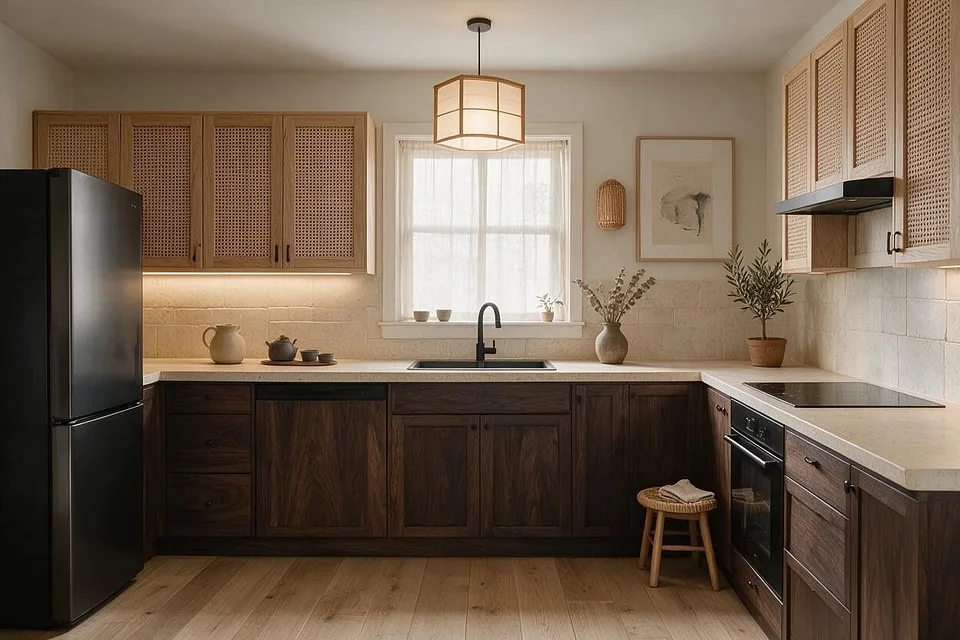
8 Japandi sunroom ideas
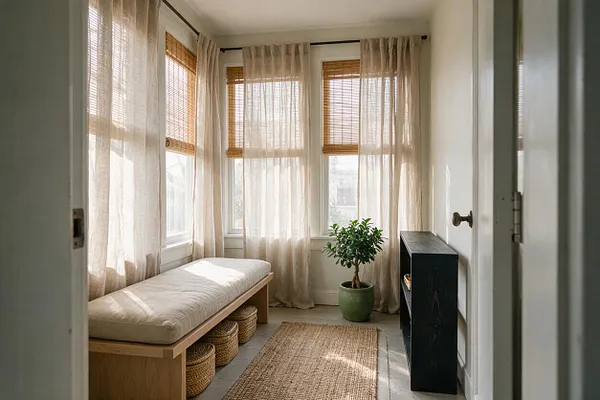
Scandinavian functionalism fused with Japanese restraint: warm neutrals, low furniture in pale and dark wood, black accents, a few handmade objects. Warm white, oatmeal, greige, sand and clay dominate, with charcoal or black accents and a muted sage or moss, and pale oak set against dark walnut or black-stained wood — that light-and-dark wood contrast is the signature. Light oak and ash with walnut or smoked oak, bamboo, rattan, cane and paper, linen, cotton, wool and bouclé, matte unglazed stoneware, honed stone or microcement, limewash or matte paint, pale wood floors. Furniture is low-profile and slim with softened edges and visible joinery — a low oak platform bed, a low linen sofa, a low walnut coffee table, a cane-panelled sideboard or tansu-style cabinet, wishbone-style wooden dining chairs, a paper floor lamp. Linen, washed cotton, wool and bouclé with a jute rug, and no pattern beyond texture. Paper lanterns, woven rattan pendants, hidden warm light and candles, with daylight diffused through sheer linen. Hand-thrown ceramics, a single branch or dried grasses in a stoneware vase, a potted tree or bonsai, a folding or slatted timber screen, woven baskets and one abstract or ink artwork finish it. No glossy white or chrome, no bright colour, no tufting or patterned textiles, no clutter; and no full tatami-and-shoji set — that is a Japanese room. Darker and lower than Scandinavian, more refined and finished than Wabi-Sabi.
Free to try, no card needed.
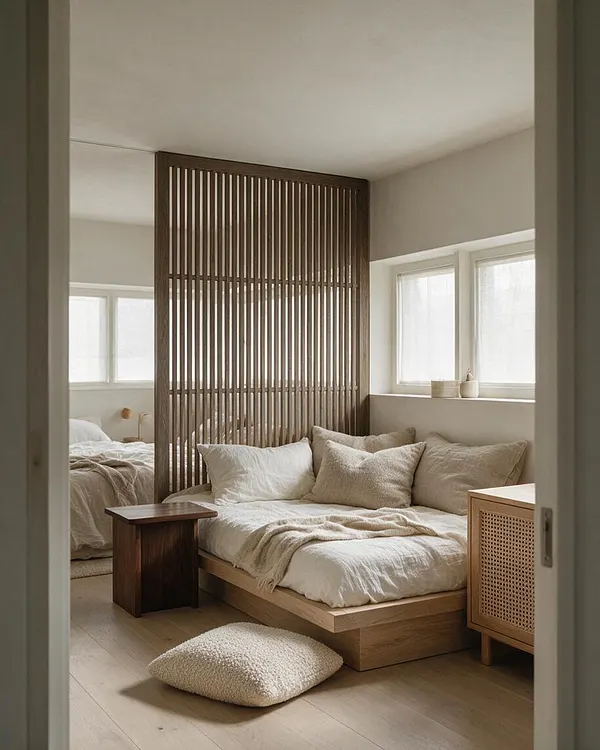
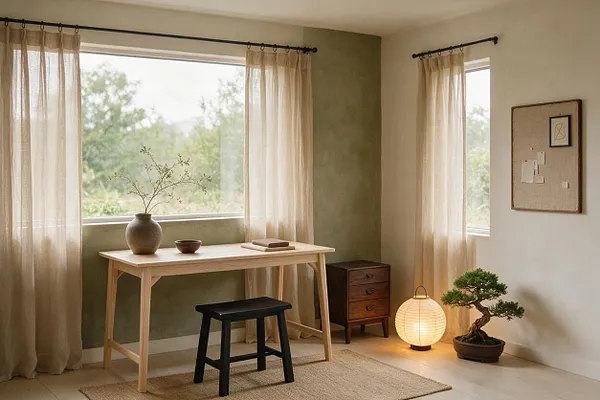
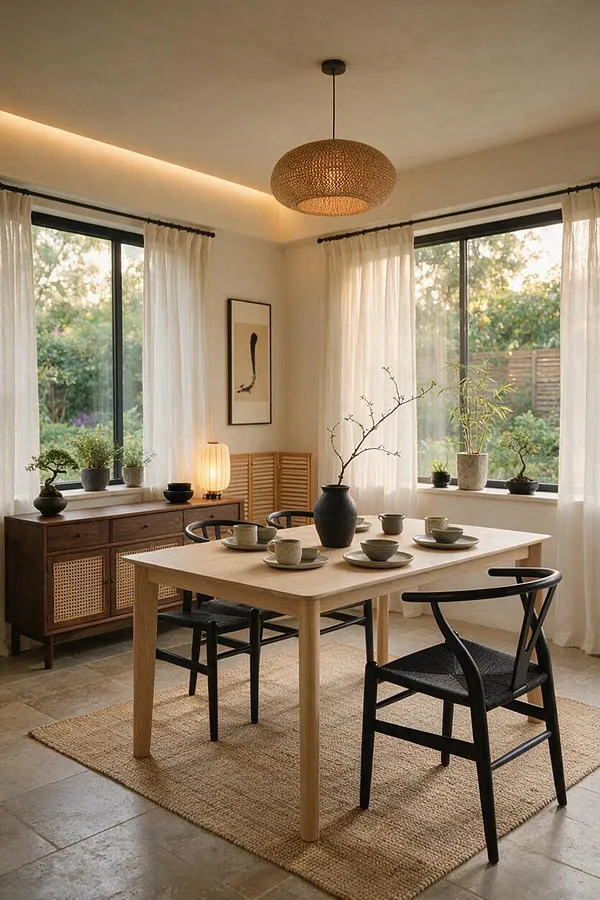
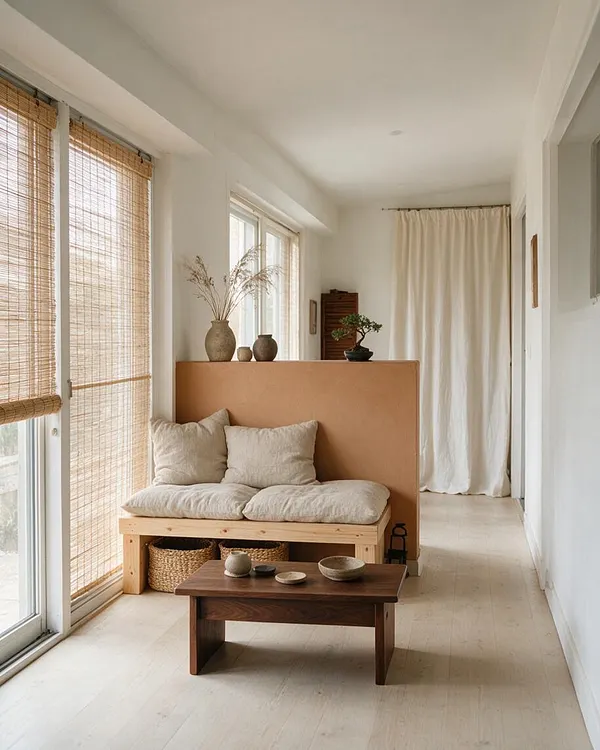
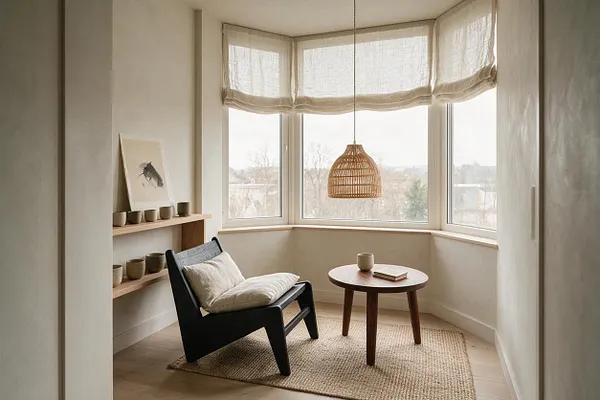
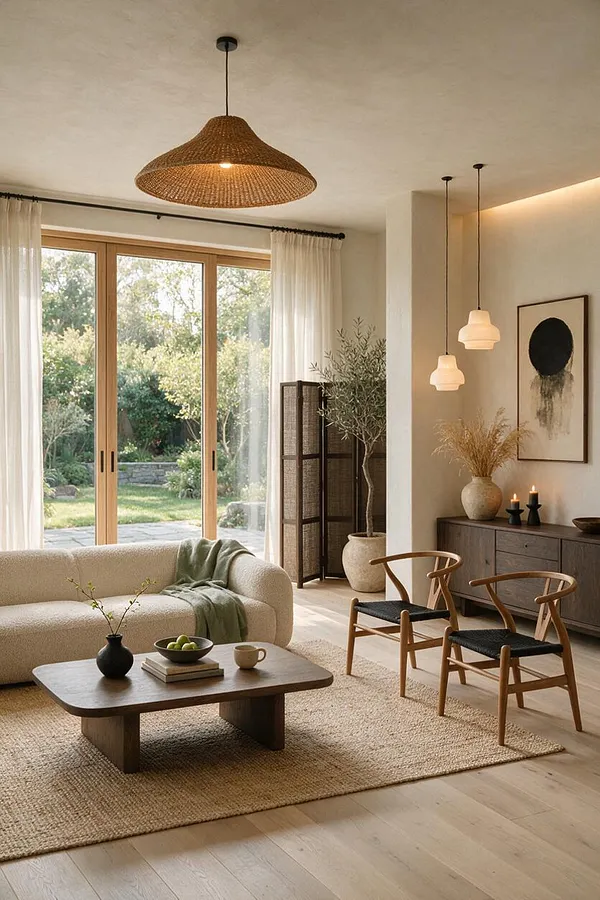
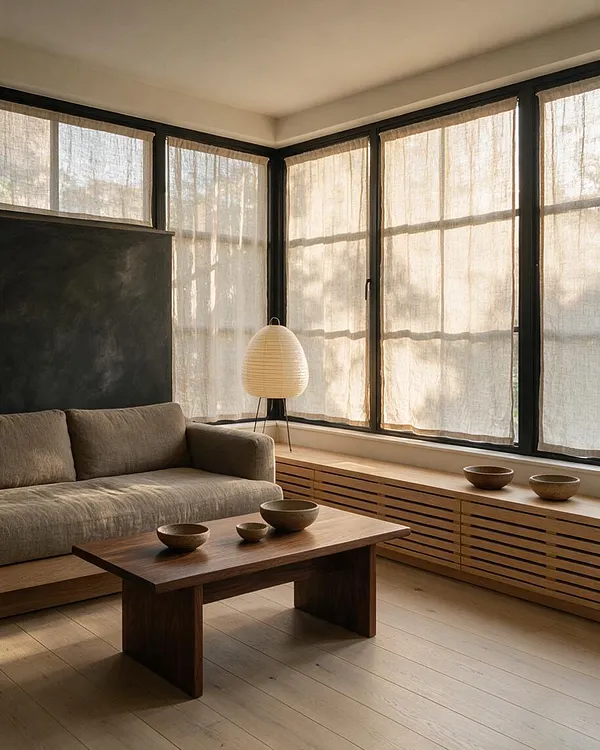
These are ideas. Here is a real kitchen.
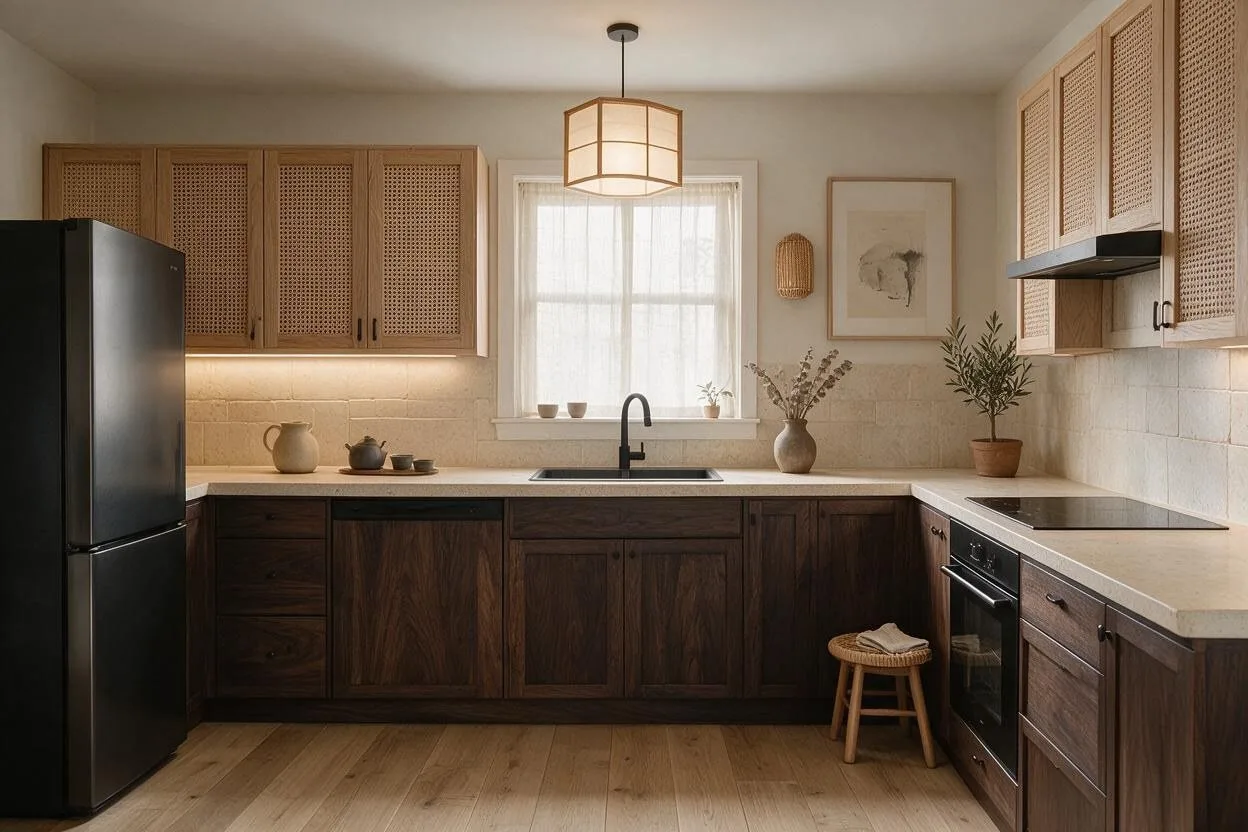
An ordinary kitchen, photographed as it was, then redesigned in Japandi with Room AI. The walls, windows and camera stay where they were. Drag the handle.
Do this to my sunroom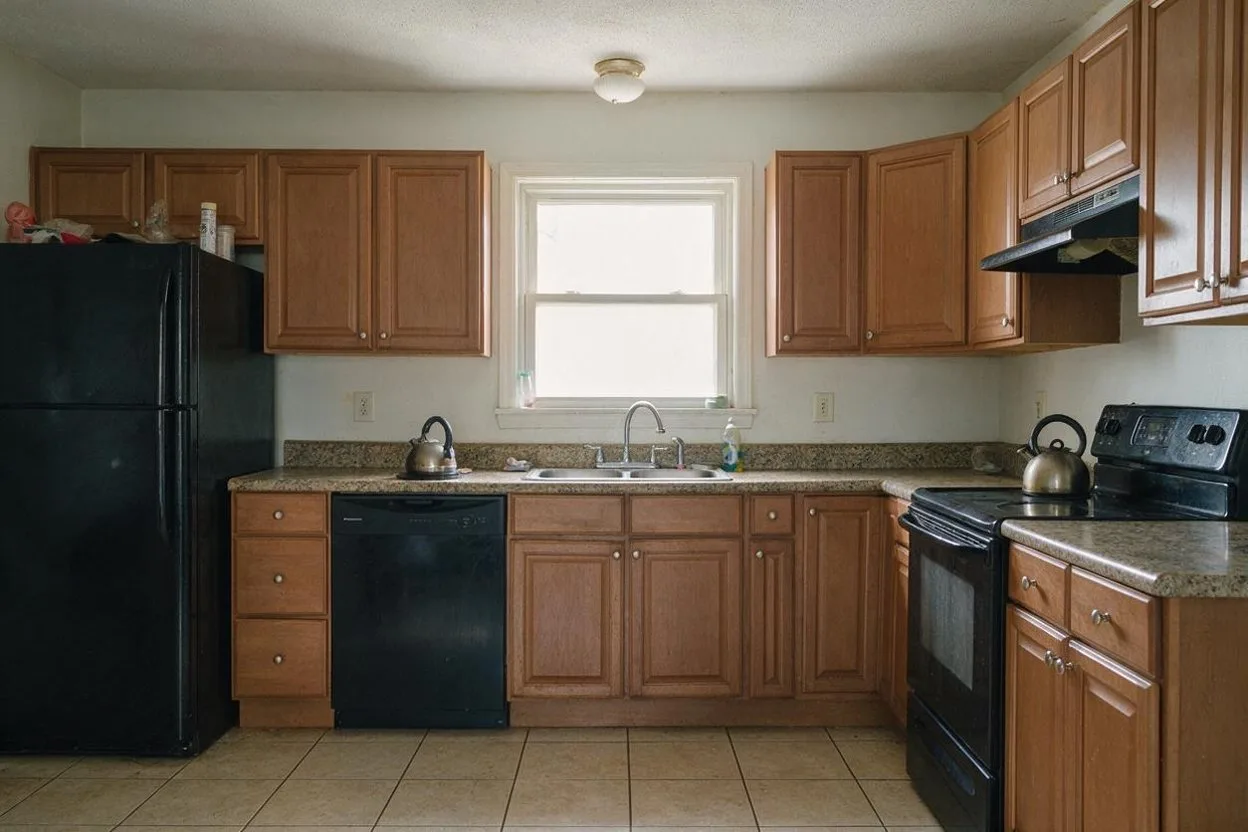
 Before
After
Before
After
 The Japandi style, explained
Japanese calm meets Scandinavian warmth.
The Japandi style, explained
Japanese calm meets Scandinavian warmth.
Now picture it in your own sunroom.
Upload a phone photo and ask for the Japandi style. Your walls, windows and floor plan stay; everything else can change. Free to try, no card needed.