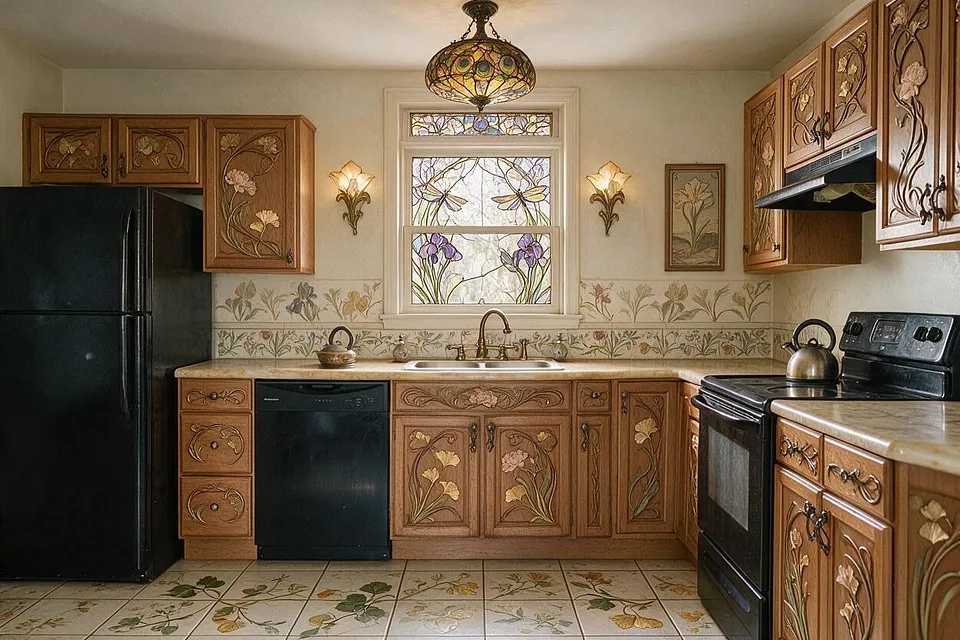
0 Art Nouveau basement ideas
The flowing organic style of around 1900: one sinuous whiplash plant line running through wood, iron, glass and walls. Colours are muted and natural — cream plaster, celadon and olive, mustard-ochre, honey-wood brown, with dusty lilac, amber and petal pink, and cobalt or plum in glass. Ash, oak and walnut are carved and bent into tendril forms with floral marquetry; wrought iron curls into vines; glass is leaded, stained and iridescent; tiles are glazed with flowers; bronze is patinated. Furniture is curved and asymmetric with ornament grown from the structure — a marquetry cabinet on carved tendril legs, bentwood chairs, stem-backed dining chairs with curved arms, a tall carved headboard, a settee with flowing arms. Fabrics and wallpaper show stylised irises, lilies, poppies, wisteria, ginkgo leaves, dragonflies and peacock feathers. Stained-glass lamps on bronze bases, lily-shaped sconces and amber dome pendants light it; stained-glass transoms, poster art and stencilled whiplash friezes finish it. Nothing is straight or symmetrical, and there are no chevrons or sunbursts — those are Art Deco.
Free to try, no card needed.
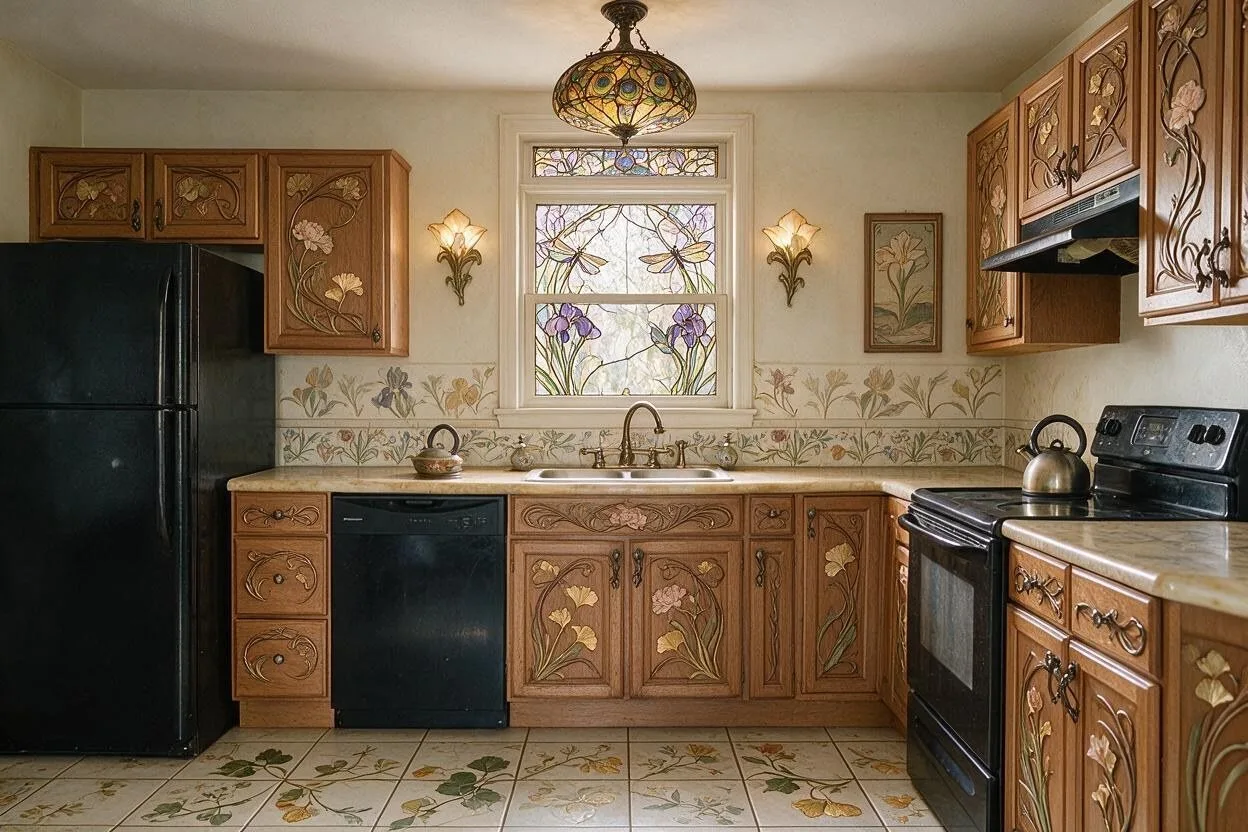
These are ideas. Here is a real kitchen.
An ordinary kitchen, photographed as it was, then redesigned in Art Nouveau with Room AI. The walls, windows and camera stay where they were. Drag the handle.
Do this to my basement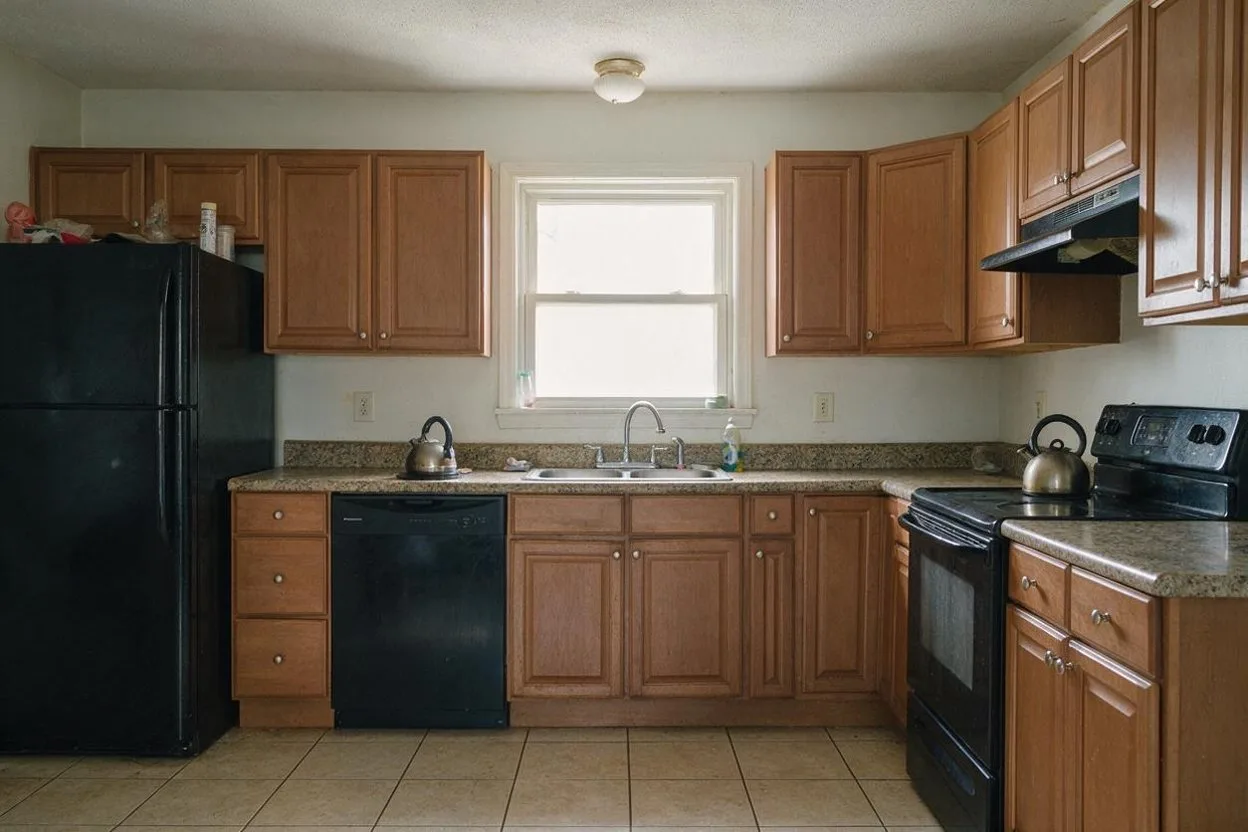
 Before
After
Before
After
 The Art Nouveau style, explained
Flowing lines borrowed from plants, around 1900.
The Art Nouveau style, explained
Flowing lines borrowed from plants, around 1900.
Now picture it in your own basement.
Upload a phone photo and ask for the Art Nouveau style. Your walls, windows and floor plan stay; everything else can change. Free to try, no card needed.