Japanese Zen Dining Room Ideas

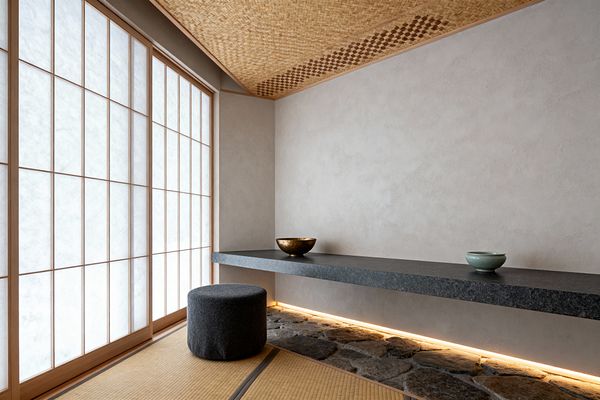
A serene Japanese-style dining corner features full-height shoji screens framed in light wood, diffusing soft daylight onto tatami mats. A floating dark stone ledge functions as a low table above a strip of fieldstone lit by concealed warm LEDs, with a charcoal round stool nearby, a woven bamboo ceiling with a subtle checker pattern overhead, and simple vessels—a bronze bowl and a celadon cup—set against textured beige plaster walls. Zen Dining Nook with Shoji and Tatami
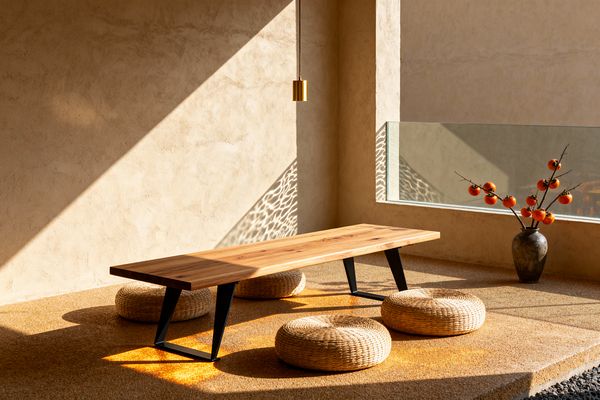
A minimalist Japanese-style dining area with a low rectangular wood table on black metal legs, surrounded by four round woven floor cushions. Sunlight enters through a low window, creating water-like reflections on textured beige plaster walls and a sandy floor. A small brass pendant hangs above the table, and a dark ceramic vase with a branch of orange persimmons sits near the window, beside a narrow edge of dark river stones. Zen Dining with Low Wood Slab Table
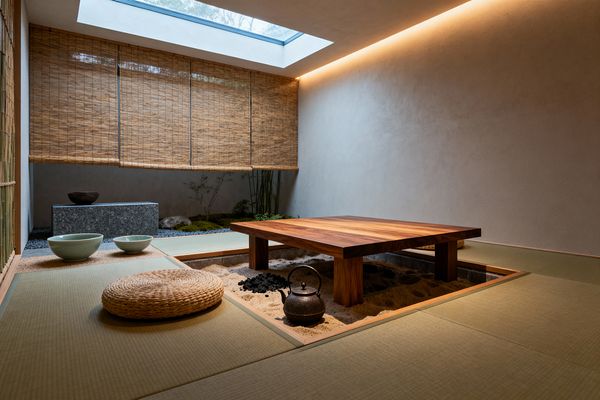
A minimalist Japanese dining room features a low solid-wood table set over a sunken sand hearth with charcoal and a cast-iron kettle, surrounded by tatami mats and round woven floor cushions. A skylight and warm cove lighting wash plaster walls, while bamboo roll-up blinds filter views to an indoor rock garden with moss, pebbles, and a granite bench; simple ceramic bowls rest on a straw mat. Tatami Dining with Sunken Irori and Skylight
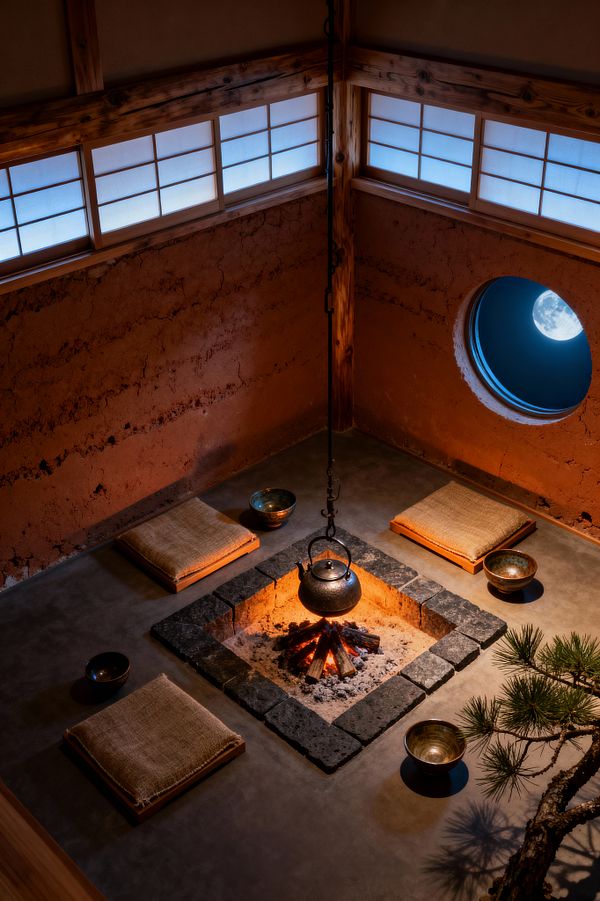
A Japanese-style dining room centers on a sunken irori hearth lined with dark stone, where a cast-iron kettle hangs from a chain and four low woven cushions on wooden bases surround the fire on a smooth concrete floor with small ceramic bowls. Earthen clay plaster walls and cedar trim meet shoji screens, while a round moon-viewing window frames the night sky, balancing warm firelight with cool blue exterior light to create a calm, intimate setting. Zen Irori Dining with Earthen Walls and Shoji
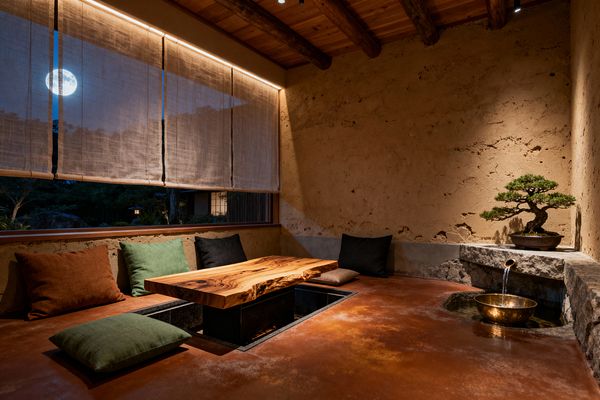
An intimate Japanese-style dining room features a live-edge wood table over a recessed leg well, with low floor cushions in green, rust, charcoal, and taupe along clay plaster walls. Warm cove lighting above sheer linen window shades and a spotlight on a bonsai create calm ambiance, while a rough stone ledge with a brass spout pours into a metal bowl fountain; the burnished red earthen floor and exposed timber ceiling beams emphasize natural textures, with a moonlit garden visible outside. Horigotatsu Dining with Wabi-Sabi Water Feature
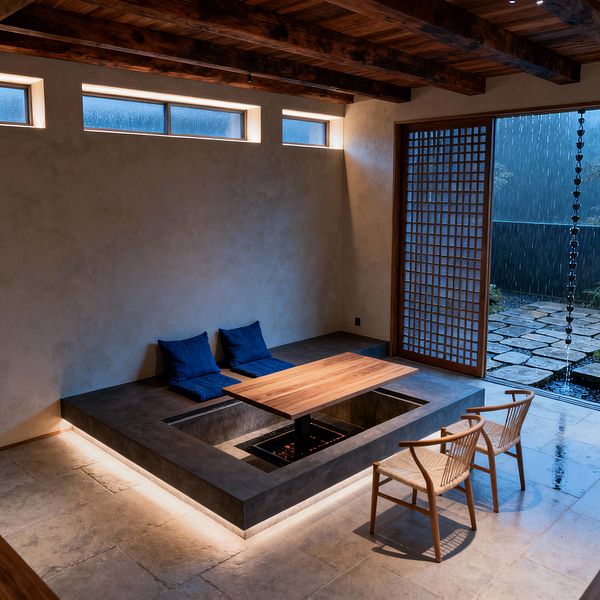
A minimalist Japanese dining room with a sunken horigotatsu: a rectangular concrete platform surrounds a recessed well with a light wood table, partnered with two blue floor cushions and two wood chairs with woven seats. Warm plaster walls sit beneath dark exposed beams, with narrow clerestory windows and a shoji-style lattice door opening to a rain-soaked stone garden and rain chain; soft LED lighting glows under the platform and across the limestone floor. Zen Horigotatsu Dining with Shoji and Rain Chain
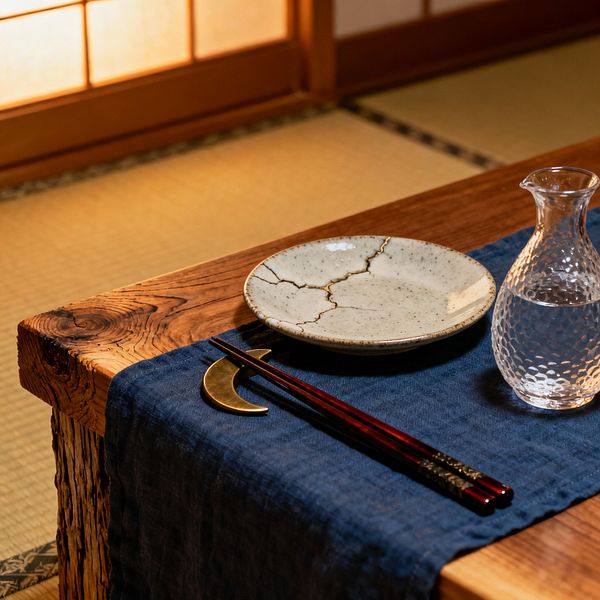
A close-up of a Japanese-style dining setting shows a low, rustic wood table beside tatami mats and softly lit shoji screens. An indigo linen runner holds a speckled ceramic plate repaired with gold kintsugi seams, a brass crescent chopstick rest with dark red lacquered chopsticks, and a clear dimpled glass carafe, all arranged with minimal clutter and warm ambient light to convey a calm, wabi-sabi-inspired atmosphere. Low Zen Dining with Kintsugi Accents
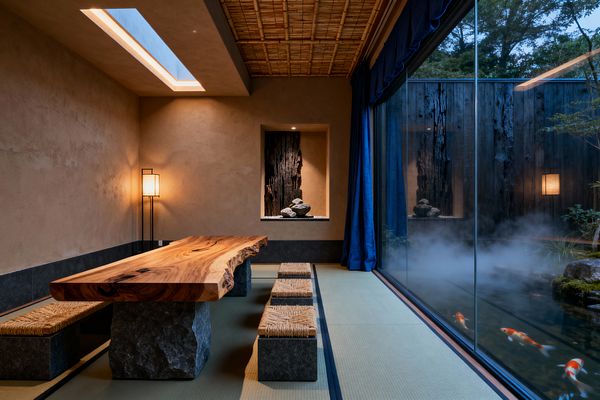
A Japanese Zen dining room features a low live-edge wood table on rough stone bases with woven stools atop tatami mats. Earthen plaster walls and a bamboo ceiling frame a niche with charred timber and river stones, lit by a slender floor lantern and a linear skylight. A full-height glass wall with indigo drapes overlooks a misted koi pond and dark wood garden wall, creating a calm, minimalist atmosphere. Zen Dining with Live-Edge Table and Koi View
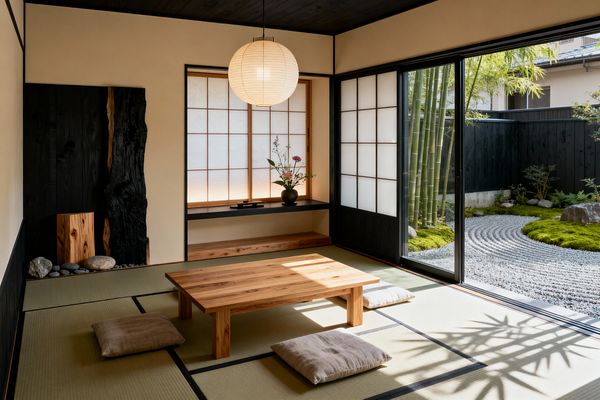
A serene Japanese dining room features a low solid-wood table on tatami mats with linen floor cushions, beige plaster walls, and black trim. Shoji screens and a rice-paper pendant diffuse light over a tokonoma alcove displaying a vase arrangement beside a charred-wood panel and river stones; sliding doors open to a compact Zen garden with raked gravel, moss mounds, rocks, bamboo, and a dark timber fence. Tatami Dining with Shoji and Zen Garden
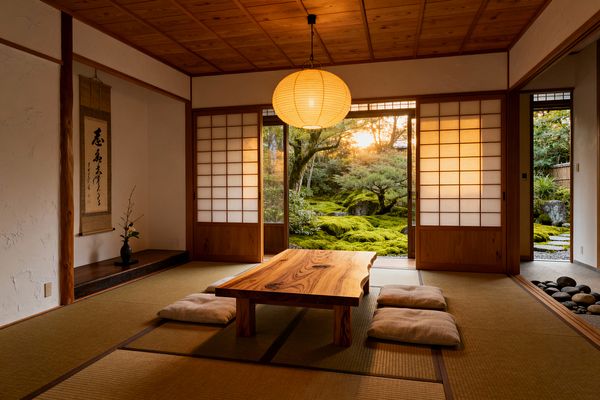
A serene Japanese-style dining room features tatami mats and a low, live-edge cedar table with four beige floor cushions beneath a round paper lantern. Shoji screens in wood frames open to a lush moss garden at sunset; to the left, a tokonoma alcove holds a hanging calligraphy scroll and a dark ceramic vase with a single branch. Smooth river stones line the threshold, while a wood-paneled ceiling and plaster walls keep the palette warm and natural. Tatami Dining with Live-Edge Cedar Table